Server‑Side Analytics in 2026 and Beyond

Server-side measurement has experienced sharp shifts over the past decade. Regulatory pressure from Europe’s GDPR, browser interventions like Apple’s Intelligent Tracking Prevention (ITP), and the evolving stance on third-party cookies fundamentally changed how organizations think about data collection. While Google’s revised approach to cookie deprecation reduced some urgency, the structural changes to the ecosystem remain.
First-party data is now central to marketing strategy. Privacy expectations are higher. Signal loss is real. In this environment, server-side tagging is no longer just a defensive response to browser restrictions. It’s become a strategic tool for improving data quality, strengthening governance, and enabling privacy-aware activation across channels.
For organizations planning their 2026 measurement roadmap, the real question is no longer whether server-side matters. It’s which implementation path aligns with your technical maturity, compliance requirements, and long-term data strategy.
What is Server-Side Tag Management?
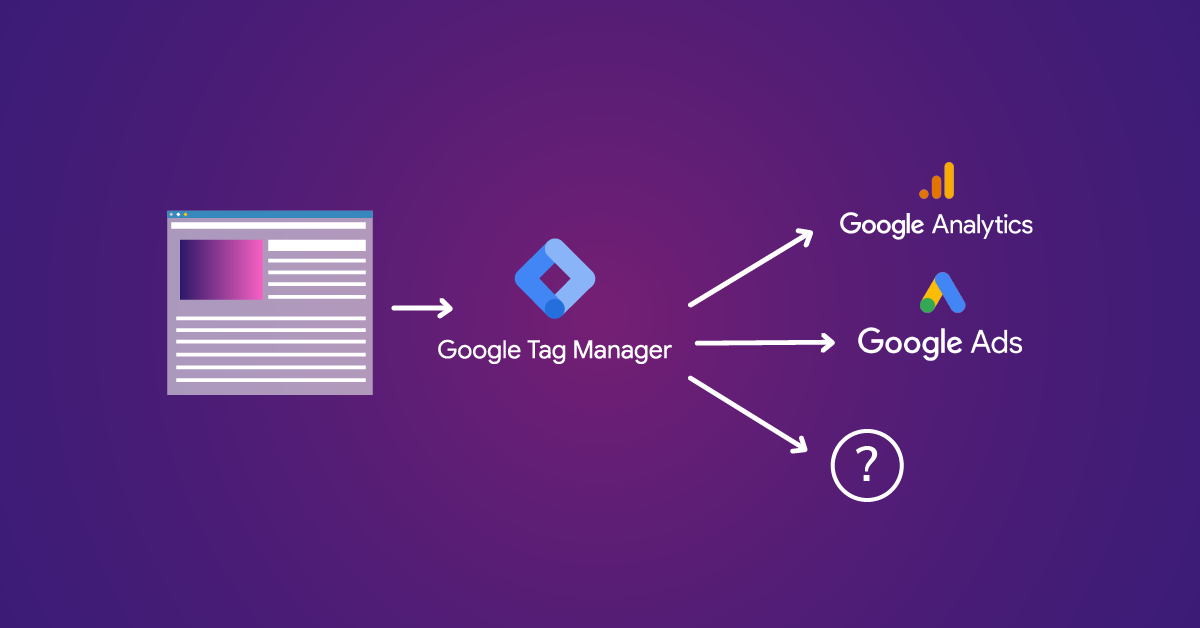
Server-side tag management moves data processing from the user’s browser to a controlled server environment. Instead of relying entirely on client-side scripts, organizations can route analytics and marketing events through a server layer before forwarding them to downstream platforms.
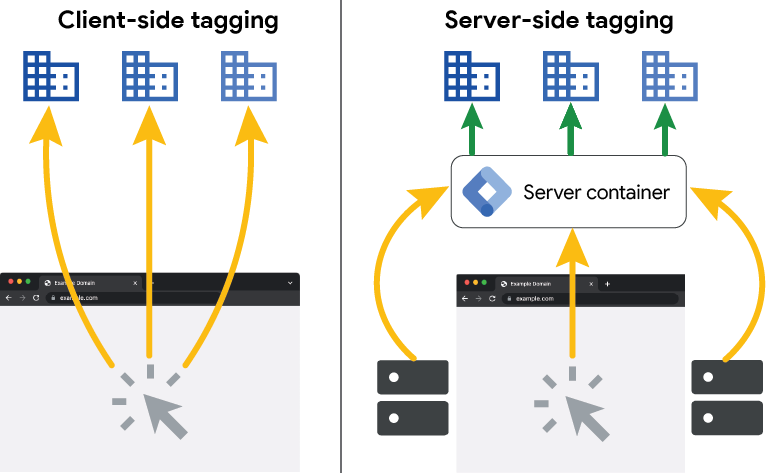
This architectural shift provides meaningful advantages.
First, it improves data governance. Organizations gain greater control over what information is collected, transformed, and shared with third parties. Rather than disturbing numerous vendor pixels across the browser, teams can selectively send only the required data through secure conversion APIs. When paired with a consent management platform such as OneTrust or TrustArc, server-side tagging supports privacy-forward implementation rathern than circumventing regulation.
Second, it mitigates tracking degradation. Browser restrictions, ad blockers, and shortened cookie lifespans continue to affect client-side measurement. While respecting user choice remains essential, server-side infrastructure reduces reliance on third-party script execution and improves signal durability.
Third, it enables operational flexibility. Routing events through a server container allows organizations to transform, validate, or enrich data before it reaches analytics tools, ad platforms, or data warehouses. For many enterprise teams, this middleware layer becomes a foundational component of modern measurement architecture.
Finally, there are potential performance benefits. Moving vendor scripts off the browser can reduce client-side load, contributing to faster page performance. While the impact varies, consolidating high-compute pixels can improve stability and user experience.
What Server-Side Google Tag Manager Unlocks
Server-side Google Tag Manager (sGTM) goes far beyond improved compliance and tracking resilience. In practice, it can function as a middleware layer that supports enrichment, orchestration, and real-time activation.
Data Enrichment and Transformation
With sGTM, events can be augmented before reaching downstream systems. Instead of forwarding raw behavioral data, organizations can append high-value attributes such as loyalty tier, lifetime value, purchase frequency cohort, or customer status from internal systems.
In more advanced environments, teams use Google Cloud infrastructure to enrich events with predictive attributes generated through BigQuery Machine Learning or Vertex AI. Lead scoring, churn probability, and propensity modeling can be calculated and appended before activation in advertising or marketing automation platforms.
This enrichment is often impractical in a purely client-side model. A server container introduces a scalable, centralized processing layer that supports these transformations.
Real-Time Data Streaming
Server-side infrastructure also enables real-time orchestration. When key events occur, such as a B2B order submission or high-value conversion, the server container can trigger downstream pipelines using technologies like Google Cloud Pub/Sub or Kafka.
These events can initiate post-purchase workflows, alert sales teams, or activate personalized lifecycle messaging. Instead of waiting for nightly batch processes, organizations can respond immediately to high-intent behaviors.
In our experience, the most effective implementations treat sGTM not as a tagging upgrade, but as an architectural shift toward event-driven marketing operations.
Offline Data Processing and Orchestration
Server-side containers aren’t limited to digital interactions. Offline events such as inbound calls, CRM status changes, in-store purchases, or lead progression milestones can be sent through the GA4 Measurement Protocol into the server container.
From there, events can be routed to advertising platforms, analytics systems, and other server-to-server integrations. This approach closes attribution gaps and creates a more complete view of the customer journey across digital and operational touchpoints.
AI Bots and Fraud Detection
Because traffic is proxied through your server environment, you gain an additional checkpoint before events enter analytics and marketing systems. Organizations can leverage content delivery networks (CDNs), reCAPTCHA solutions, and custom validation logic to assign bot scores or filter suspicious traffic.
As AI-driven crawling and automated traffic continue to increase, this intermediary layer can play a meaningful role in protecting data integrity.
Operational Trade-Offs and Implementation Realities
Despite its advantages, server-side tagging introduces complexity.
sGTM requires cloud infrastructure, configuration expertise, and ongoing governance. Hosting environments, monitoring, scalability, and debugging become part of the analytics function. Costs increase due to compute usage, storage, and operational support.
Initial migrations can also be resource intensive. Event design, identity strategy, consent alignment, and vendor integrations must be carefully planned. Organizations that underestimate this foundational work often face reimplementation later.
For teams without dedicated analytics engineering resources, a full custom build may not be realistic. The right solution depends on organizational maturity and long-term roadmap clarity.
Choosing the Right Server-Side Path
A traditional sGTM deployment is only one option. Several alternative approaches offer varying degrees of control, complexity, and cost.
Direct API Integrations (Manual Server-Side Tracking)
Development-heavy organizations sometimes implement direct server-to-server API integrations with advertising and analytics platforms. This approach provides maximum control and avoids reliance on intermediary tools.
However, it can be difficult to scale. Each new vendor requires additional engineering effort, and long-term maintenance can become burdensome without a structured tracking roadmap.
Customer Data Platforms (CDPs)
CDPs such as Segment, mParticle, Tealium, RudderStack, Amplitude, Mixpanel, Bloomreach, and others offer built-in server-side collection and forwarding capabilities. Many include identity resolution, governance tooling, and audience activation features.
This model centralizes data routing within a SaaS-managed environment. The trade-offs include platform cost, implementation effort, and reliance on managed connectors that may limit visibility into event transformations.
For organizations already invested in a CDP, this can be an efficient path. Success depends heavily on getting event taxonomy, identity design, and consent logic correct from the outset.
Google Tag Gateway (First-Party Mode)
Google Tag Gateway allows organizations to serve Google Tag and Google Tag Manager libraries from a first-party domain using CDN-based configurations. It doesn’t provide full server-side processing, but it improves resilience and first-party signal handling without requiring new infrastructure.
For teams primarily seeking improved tag delivery and reduced blocking, this lightweight option may provide sufficient benefit.
Managed Server-Side Tagging Platforms
Managed providers such as Stape.io and Addingwell handle sGTM hosting and infrastructure management. These platforms reduce operational overhead while preserving most server-side capabilities.
For organizations with strong analytics operations teams but limited engineering bandwidth, managed hosting often represents a pragmatic middle ground. It accelerates deployment without requiring internal cloud architecture ownership.
Summary of Alternative Options Available
| Approach | Control | Complexity | Cost | Best For |
| Direct API Integrations | High | High | Low | Full customization, lean setups |
| CDPs | Medium | Medium | Medium-High | Unified tracking, identity resolution, integration capabilities |
| Google Tag Gateway | Low | Low | Low | Lightweight solution for first-party tag serving |
| Managed Server-Sie GTM Hosting | Medium-High | Low | Low-Medium | Fast GTM server-side setup, low maintenance |
Moving Forward with Clarity
Server-side tagging is no longer a niche technical upgrade. It’s a strategic decision about how your organization collects, governs, and activates data in a privacy-aware ecosystem.
The right approach depends on your internal capabilities, compliance requirements, and long-term vision. Some organizations will benefit from full sGTM deployments with advanced enrichment and orchestration. Others may achieve meaningful gains through managed hosting or first-party tag delivery solutions.
What matters most is intentional design. Event models, identity strategy, consent alignment, and cross-functional ownership determine success far from more than the specific tooling selected.
For teams building their 2026 roadmap, server-side tagging should be evaluated not as a reaction to industry pressure, but as an opportunity to modernize measurement architecture in a controlled and scalable way.