PrintFuturism: The 5G‑Powered Retail Revolution
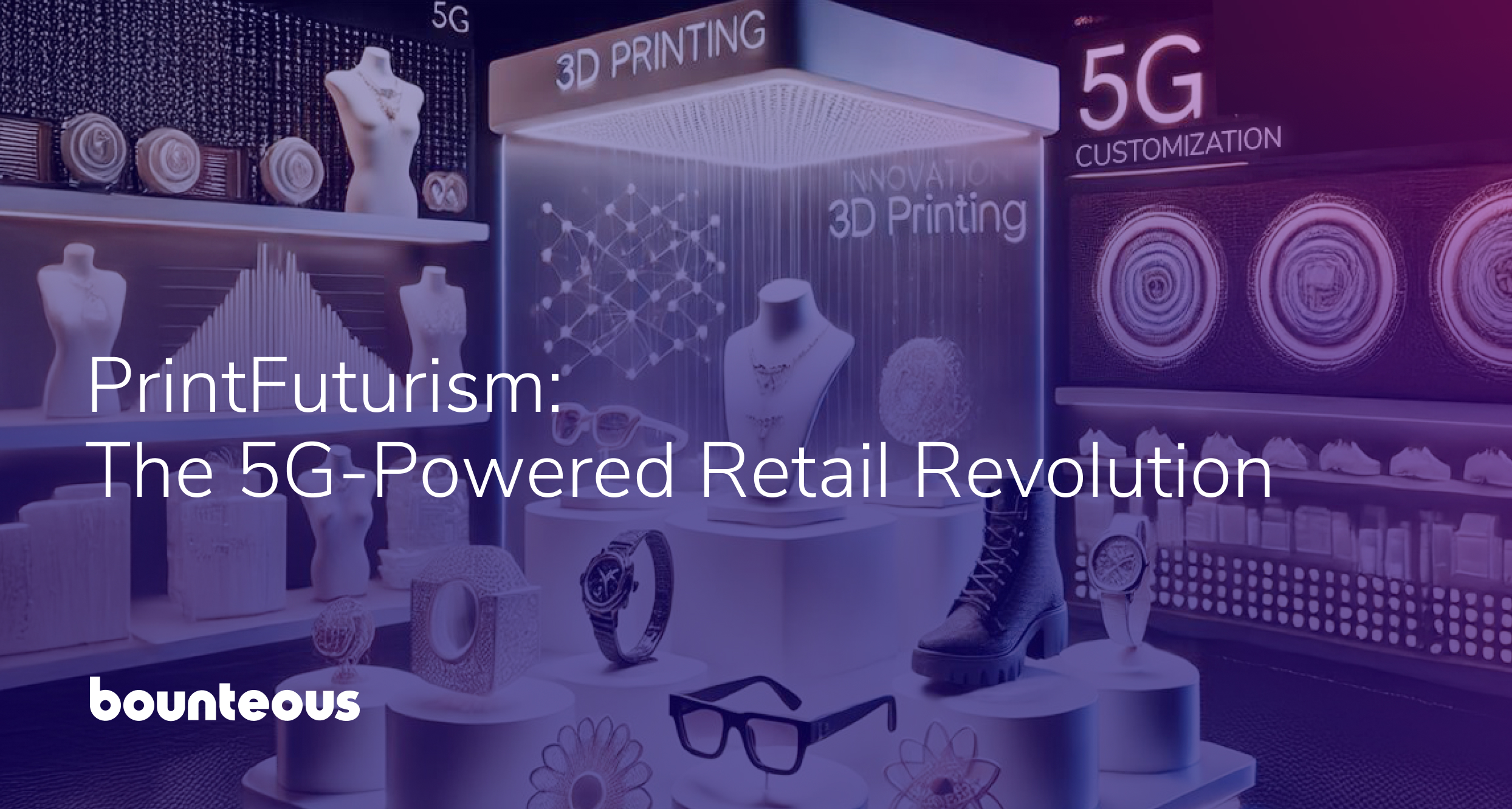
This blog discusses how retailers and telecommunications companies can collaborate through revenue-sharing models, particularly leveraging the transformative potential of 5G and 3D printing technologies. It highlights real-world applications in retail, strategic implementations, SME-focused business modeling, monetization tactics, and how telcos and retailers can build innovative, tech-powered ecosystems.
The Battle of the Block
Retail is being redefined by infrastructure, the sophisticated systems underpinning the entire shopping experience. These systems include logistics networks, data analytics, supply chain management, and digital platforms seamlessly integrating both online and offline channels. As 5G, AI, 3D printing, and edge computing work in sync, they are enabling a shift away from mass production to real-time, customer-specific manufacturing. It's a model that's local, fast, and smart and it’s already changing how retailers and telcos think about value.
Imagine walking into a store, scanning your foot, and walking out with a pair of customised sneakers. Or logging into an app, customizing jewellery using AI-generated design suggestions, and seeing that design turned into a castable model, 3D printed locally, cast into metal and delivered within days from a nearby production hub. This concept sketch is in motion across footwear, eyewear, fashion, home décor, in fact all around.
On-Demand Retail Powered by 5G
AI-driven personalization, AR-based try-ons, and decentralized 3D manufacturing are moving beyond pilots. Retailers are implementing in-store kiosks to enhance customer experience. Footwear brands are optimizing midsoles, and interior designers are offering clients bespoke pieces. This is on-demand retail, powered by cutting-edge technologies like 5G, integral to creating seamless, instant shopping experiences. 5G in this context, is the enabler of real-time data transfer, seamless AR rendering, and the low latency needed to support instant previews, customizations, and order fulfilment workflows. Without it, the experience stutters.
For small and medium-sized enterprises (SMEs), this tech stack removes long-standing barriers. There’s no need for bulk inventory, or offshore production. With 5G and cloud-based 3D printing-as-a-service platforms, an SME can launch a hyper-personalized product line without owning a factory or distribution network. Localized production also means faster delivery, lower emissions, and less waste.
Telcos as Infrastructure Partners
This is where telcos come in. The connectivity and compute power comes from the network opening doors to new business models. Telcos can be the infrastructure partners, data platform operators, even fulfilment enablers. Revenue can be shared through usage-based pricing, premium delivery tiers, or bundled AR/5G shopping subscriptions.
Several models are already being tested:
- Retailer subscription bundles: AR try-ons, real-time customization, and edge-powered delivery packaged together under a monthly plan.
- Telco-sponsored retail labs: Stores equipped with private 5G, 3D printing kiosks, and embedded edge computing to pilot new customer experiences.
- 3D printing hubs-as-a-service: Retailers tap into regional manufacturing nodes, operated by telcos, to avoid equipment ownership.
- B2B white-label manufacturing: Telcos license print capacity to brands looking to test short-run products or launch limited editions.
Even digital layers like NFT fashion or metaverse product twins are emerging as monetizable extensions of physical products. That means retailers aren’t just producing goods, they’re producing experiences. And telcos can package compute, data analytics, and 3D rendering as core components of a retail platform.
Structured Approach to Scaling
Of course, none of these scales on enthusiasm alone. For most companies, realizing the value in this space requires a structured approach. For telco and retailers alike, the transition usually happens in three phases:
- Define the model: Identify customer needs, product or service offering, and where personalization or just-in-time production create real value. This involves market research, pricing logic, and vendor selection.
- Build and test: Set up the infrastructure. This could mean edge nodes near urban centres, AI engines for product configuration, or integrating AR platforms with commerce flows. Pilot, measure, and optimize.
- Scale and monetize: Expand the successful foundation. License the platform, launch subscription services, use trend data for forecasting demand and extend into digital twins and cross-border delivery. Make data the fuel for new product development.
The retailers and telcos need to work together to move beyond experimentation – the retailers need help architecting these experiences and adapting supply chains to support them while the telcos need help productizing their infrastructure in ways that make sense to non-technical partners. When done well, both sides capture recurring revenue while improving customer outcomes.
The Future of Retail
The fundamentals of retail haven’t changed: customers still want quality, speed, and relevance. But what’s changing is how those outcomes are delivered and who gets to participate. 5G, 3D printing, and AI are turning the physical act of shopping into something dynamic, decentralized, and more responsive. And the winners in this space will be the ones who stop thinking in traditional retail, telecom, manufacturing categories and rather start thinking in ecosystems.
Print Futurism is not a hype. It’s a practical model for how modern commerce gets built. Fast, flexible, and local.